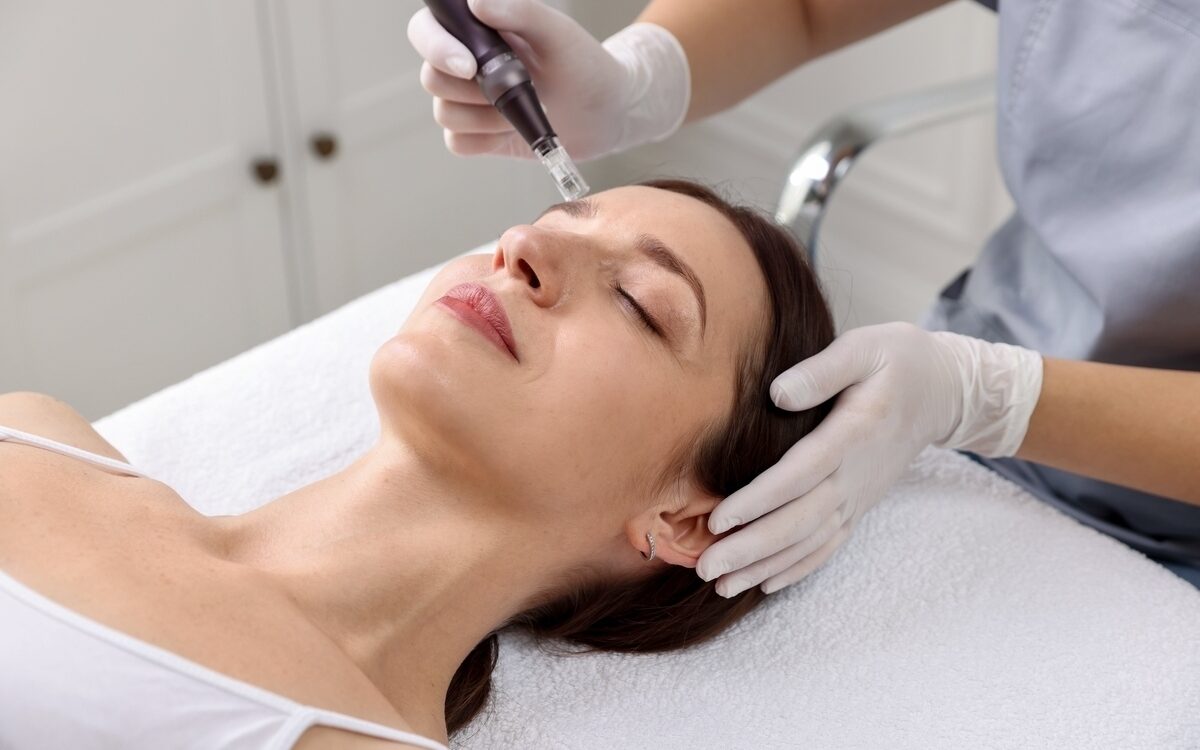
RF Microneedling vs Regular Microneedling: Key Differences
If you have been looking into skin resurfacing treatments, you have likely come across both microneedling and RF microneedling as options. At first glance they look like the same procedure, but the difference between them is significant enough to change which one is right for your specific skin concern. Understanding RF microneedling vs regular microneedling before your consultation helps you ask better questions and set realistic expectations for your results.
This guide covers how each treatment works, what it is designed to address, and how to decide which one makes more sense for your goals.
RF Microneedling vs Regular Microneedling: How Each One Works
Both treatments use fine needles to create controlled micro-injuries in the skin. Those micro-injuries trigger the body’s natural wound healing response, which produces new collagen and elastin. That much is the same. Where they differ is in what happens after the needles enter the skin.
How regular microneedling works: Standard microneedling, also called collagen induction therapy, relies entirely on the physical puncture of the skin to stimulate collagen production. A device with fine needles creates thousands of tiny channels in the upper layers of the skin. The body responds by sending collagen and elastin to repair those channels, gradually improving skin texture, tone, and firmness over several weeks.
Regular microneedling works well for surface-level concerns including mild texture irregularities, fine lines, and mild acne scarring. However, because the treatment only reaches the upper layers of the skin, its ability to address deeper structural concerns is limited.
How RF microneedling works: RF microneedling uses the same needle mechanism but adds radiofrequency energy delivered directly through the tips of the needles as they penetrate the skin. This means the treatment stimulates collagen production at two levels simultaneously: through the physical micro-injury at the surface and through the thermal energy delivered to the deeper dermis below.
The radiofrequency energy heats the deeper layers of tissue, which causes existing collagen fibers to contract and triggers the production of new collagen over time. This dual mechanism is what makes RF microneedling significantly more effective for skin laxity, deeper wrinkles, and more pronounced scarring than standard microneedling alone.
To learn more about how RF microneedling is performed and what the treatment process involves, visit our microneedling with RF service page.
What Each Treatment Is Best Used For
The right treatment depends on the depth and severity of the concern you want to address.
Regular microneedling is best for:
- Mild to moderate fine lines and surface texture
- Early signs of aging in younger patients
- Mild acne scarring that is not deeply pitted
- Uneven skin tone and hyperpigmentation
- Enlarged pores
- General skin rejuvenation and maintenance
RF microneedling is best for:
- Skin laxity and loss of firmness
- Deeper wrinkles and folds
- Moderate to severe acne scarring including pitted or ice pick scars
- Stretch marks
- Loose skin on the neck, jawline, or body
- Patients who want more significant results from a single treatment course
The key question to ask yourself is whether your concern is primarily a surface-level texture issue or a deeper structural issue involving firmness and volume. Surface concerns respond well to regular microneedling. Structural concerns involving collagen loss and skin laxity respond better to the added depth of radiofrequency energy.
According to the American Academy of Dermatology, microneedling is an effective treatment for a range of skin concerns, and the addition of radiofrequency energy has been shown to enhance results particularly for skin tightening and scar revision.
How Many Sessions Does Each Treatment Require?
The number of sessions needed varies based on the treatment type, the concern being addressed, and the individual patient’s skin and response to treatment.
Regular microneedling:
- Most patients require 3 to 6 sessions spaced 4 weeks apart
- Maintenance sessions are typically recommended every 3 to 6 months
- Results are gradual and continue to improve for several months after the final session
RF microneedling:
- Most patients require 3 to 4 sessions spaced 4 to 6 weeks apart
- Because the treatment reaches deeper tissue, fewer sessions are often needed to achieve comparable or superior results
- Results continue to develop for up to 6 months after the final session as collagen remodeling progresses
For patients comparing RF microneedling vs regular microneedling on the basis of treatment commitment, RF microneedling often requires fewer sessions while delivering more significant long-term improvement, particularly for concerns involving skin laxity and deeper scarring.
What Does Each Treatment Feel Like?
Both treatments involve needles, so some level of sensation is expected. Providers apply a topical numbing cream before either procedure to minimize discomfort, and most patients find both treatments very tolerable.
Regular microneedling:
- Most patients describe a mild scratching or vibrating sensation
- Redness and minor swelling are common for 24 to 48 hours after treatment
- Downtime is minimal and most patients return to normal activities the following day
- Skin may feel tight or look slightly flushed for a few days
RF microneedling:
- Most patients describe a sensation of heat and pressure during the procedure
- Redness, swelling, and mild sensitivity are common for 2 to 4 days after treatment
- Downtime is slightly longer than regular microneedling due to the added thermal component
- Skin may feel warm and look more flushed than after standard microneedling, but this resolves within a few days
The additional downtime with RF microneedling is a trade-off for deeper results. Most patients find it manageable and plan their appointments accordingly.
According to the American Society of Plastic Surgeons, radiofrequency-assisted microneedling treatments are considered safe and well-tolerated when performed by a trained provider, with a favorable side effect profile relative to more invasive resurfacing procedures.
How Long Do Results Last?
Both treatments produce results that continue to improve over time as collagen remodeling progresses, but the duration of those results differs between the two.
Regular microneedling results:
- Initial improvement is visible within 2 to 4 weeks of the first session
- Full results develop over 3 to 6 months following the final session
- Results typically last 6 to 12 months before maintenance is recommended
RF microneedling results:
- Initial improvement may be visible within a few weeks but continues to develop significantly over 3 to 6 months
- Because RF microneedling stimulates deeper collagen remodeling, results tend to last longer
- Many patients maintain their results for 12 to 18 months or longer before a touch-up is needed
For patients weighing RF microneedling vs regular microneedling on longevity alone, RF microneedling generally delivers results that last longer and require less frequent maintenance.
To learn more about how RF microneedling supports long-term skin tightening and what results you can realistically expect, visit our page on radiofrequency microneedling for skin tightening.
Who Is a Good Candidate for Each Treatment?
Both treatments are suitable for a wide range of skin types and tones, but there are some differences in candidacy worth knowing before your consultation.
Regular microneedling candidates:
- Patients with mild to moderate skin concerns
- Younger patients in their 20s and 30s addressing early signs of aging
- Patients looking for a lower-cost maintenance treatment
- Those with minimal downtime availability
RF microneedling candidates:
- Patients with moderate to significant skin laxity or deeper scarring
- Patients in their 30s, 40s, and beyond addressing collagen loss
- Those who want more dramatic results from fewer sessions
- Patients who have not seen adequate results from regular microneedling alone
Both treatments are generally safe for all Fitzpatrick skin types, though your provider will assess your individual skin during a consultation to confirm candidacy and recommend the appropriate treatment settings.
According to the American Board of Cosmetic Surgery, RF microneedling is particularly well-suited for patients with skin laxity concerns who are not yet ready for surgical intervention, offering meaningful improvement without the risks and recovery associated with more invasive procedures.
How to Decide Which One Is Right for You
If you are still unsure which treatment fits your situation, here is a straightforward framework to use before your consultation.
Choose regular microneedling if:
- Your concerns are mild and surface-level
- You are new to skin resurfacing treatments and want to start conservatively
- You have a limited budget or want a lower-cost maintenance option
- Your downtime availability is very limited
Choose RF microneedling if:
- You have noticeable skin laxity, deeper wrinkles, or pronounced scarring
- You want more significant results from a single course of treatment
- You are comfortable with slightly more downtime in exchange for deeper improvement
- You have tried regular microneedling and want to take results further
Consider a consultation first if:
- You are unsure which category your concern falls into
- You have never had a professional skin assessment
- You want a provider to assess your skin and recommend the most appropriate treatment depth
Frequently Asked Questions
For patients with skin laxity, deeper scarring, or significant collagen loss, RF microneedling is generally worth the upgrade. It reaches deeper tissue, stimulates more collagen remodeling, and produces results that last longer than standard microneedling.
Both treatments are performed with topical numbing cream. Most patients describe RF microneedling as involving more of a heat sensation compared to the scratching sensation of standard microneedling. Both are considered very tolerable by most patients.
RF microneedling typically costs more per session than standard microneedling due to the technology involved. However, because fewer sessions are often needed to achieve results, the overall cost difference may be smaller than it appears on a per-session basis.
Yes. RF microneedling is considered safe for all Fitzpatrick skin types including darker skin tones. Because the energy is delivered below the surface, there is a lower risk of post-inflammatory hyperpigmentation compared to some laser treatments.
Most providers recommend waiting at least 24 to 48 hours before applying makeup after RF microneedling to allow the skin barrier to begin healing. Your provider will give you specific aftercare instructions based on your treatment settings.
RF Microneedling vs Regular Microneedling: Which One Is Right for You
When comparing RF microneedling vs regular microneedling, the right choice comes down to the depth and severity of your skin concern. Standard microneedling is a solid option for mild surface-level issues and general skin maintenance. RF microneedling is the stronger choice when the goal is to address deeper structural concerns including skin laxity, significant scarring, and more advanced collagen loss.
The best way to determine which treatment is appropriate for your specific skin is to speak with a licensed provider who can assess your concerns and recommend the right approach.
If you are in the Maryville area and want to learn more about RF microneedling as a treatment option, visit our RF microneedling page for Maryville, TN.
Disclaimer
This blog post is intended for informational purposes only and does not constitute medical advice. Always consult a licensed medical professional before undergoing any cosmetic treatment. If you experience unexpected symptoms after a procedure, contact your provider immediately.